

Dating sites use legacy assessment systems.

Many dating sites have used legacy-type personality assessment systems for romantic matching. None of them have worked all that well.
The most conspicuous failure was Chemistry.com. Its matching system, developed by an academic researcher, didn’t work well enough to deliver on the site’s implicit promise, and chemistry.com went inactive in 2018.
eHarmony is the only current dating site built around a matching system. It uses an FFM-based system developed by a psychologist. Does its system work? Not well enough to provide it with an advantage over standard view-and-choose dating sites.
Corporate America also uses legacy systems.

The companies that currently dominate the $10 billion personality assessment market, such as Hogan Assessments and Mercer Assessments, all employ legacy FFM systems in their assessments. These systems are used mainly by big corporations’ HR departments to test and filter applicants for low- and mid-level jobs.
As AI comes into widespread use, many low- and mid-level white-collar jobs are being replaced by chatbots. What does this mean for legacy assessment systems? Corporations will still use them, but it won’t be a high-growth market.
New systems are needed in online dating.
Because dating sites don’t make it easy for people to find chemistry and connection, millions of their subscribers are leaving. Tinder is losing paid users. Bumble is struggling. The stock price of Match Group, which owns many of the largest dating sites, is a quarter of what it was in 2021.
To restore their fortunes, these companies need a new kind of matching system, one that actually helps people find someone they “click” with. Lacking that, they’re flailing around:
- Bumble has introduced an AI dating assistant…which operates according to superficial matching criteria that match.com used then abandoned in the 2010s.
- Date Drop got $2 million in venture funding to send college students one match per week, based on questionnaire data. That’s a feature, not a product.
Corporations also need new systems.
In a business world where AI handles clerical tasks, what sort of personality assessment systems will corporations need most? Systems that can help them build high-performing human teams.
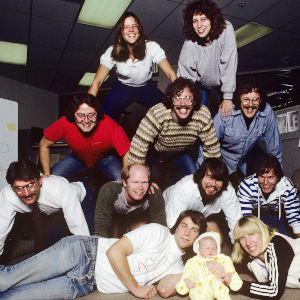
Teams of skilled people, working well together, can do things that AI can’t. They can deliver “insanely great” results that are beyond the reach of AI, and spawn innovations that make people say “Wow!” A good example is the team that produced the original Macintosh computer.
Such teams are built through insight into what makes different people tick. Legacy FFM assessment systems, because they only identify a person’s surface-level qualities, can’t give business leaders that insight.