Summary: Climate change spawned personality types.

The scientific basis of the Dyadic Type Framework™ can be summarized this way: cyclical changes in the earth’s climate impelled humans to evolve 16 personality types. Here’s how that occurred:
Over a million years, humans evolved two “hard-wired” mating strategies in response to cycles of climate change. These strategies gave rise to two basic human temperaments: sociable and reserved. For the sake of clarity, the Dyadic Type Framework™ uses animal names to designate men and women of each temperament:
| Wolf A sociable man | Fox A sociable woman |
| Hawk A reserved man | Dove A reserved woman |
Toward the end of the Paleolithic, climate change enabled humans to begin living in larger hunter-gatherer bands. This impelled us to evolve new social roles, which gave rise to eight natural human talents, which we express in general ways:
| Dancing Moving in sensual rhythm | Fighting Using force to protect |
| Singing Expressing feelings in sound | Hunting Using force to provide |
| Gathering Procuring good things | Painting Creating/appreciating art |
| Tending Nurturing to grow and heal | Crafting Creating useful things |
These two basic human temperaments and eight natural human talents combined to form 16 human personality types, which still exist today:
| Fighting Wolf | Dancing Fox |
| Hunting Wolf | Hunting Fox |
| Dancing Wolf | Singing Fox |
| Singing Wolf | Painting Fox |
| Painting Wolf | Gathering Fox |
| Crafting Wolf | Tending Fox |
| Fighting Hawk | Gathering Dove |
| Hunting Hawk | Tending Dove |
A note on terminology:
Masculine and feminine hormones shape who we are, but with types it’s simpler to talk in terms of masculine and feminine intensity. That is, the two basic elements of personality effected through those hormones.
In the Dyadic Type Framework™, each type has a different combination of masculine and feminine intensity. Here’s an example, the intensity profile of a Singing Fox:
| Masculine | Feminine | |
| High | ||
| Elevated | ||
| Moderate | ||
| Minimal | ||
Two hormones were key to our survival.
The Dyadic Type Framework™ takes its name from a dyad, or pairing, of testosterone and oxytocin. It’s based on the fact that your natural, inborn levels of these two hormones shape the core of who you are.
Why is this the case? Why do these two hormones shape our core character? Because they’ve played a central role in human evolution:
- During the past million years, the earth’s climate has changed frequently, so humans evolved different testosterone-oxytocin profiles to help them survive those changes.
- As hunter-gatherer bands got larger during the Late Stone Age, humans with different testosterone-oxytocin profiles evolved to fill important social roles within those bands.
That’s a basic description of the science that underpins this new personality type framework. Read on to learn the specifics of how human personality types evolved.
Climate change made human brains larger.
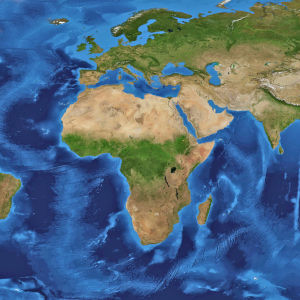
Fire-making humans of the genus homo have been around for about a million years. During all of that time, the earth’s climate has fluctuated between wet and dry.1 In evolutionary terms, these fluctuations occurred frequently: every 20,000 years or so.2 They also occurred quickly, within the span of a few decades.3
These conditions challenged early humans. In Africa, where they lived, wet eras created a forest environment. In other eras, the dry climate created a grassland environment. So, they’d adapt to living in grasslands, then their environment would change to forest. Then, when they’d adapted to living in the forest, their environment would change back to grasslands.
These environmental changes rewarded quicker thinking, better problem solving, and more social cooperation, all of which were made easier by a bigger brain.4 So, over many such cycles of change, human brains grew larger and more complex.
Large brains created large sex differences.
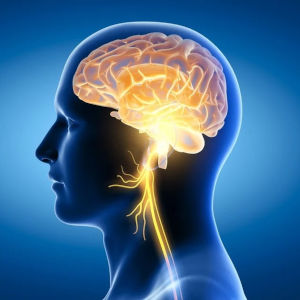
Our large brains were an asset, but they came at a cost. The human brain is an energy-hungry organ, and since meat is an energy-rich food (more energy-dense than plants), we needed meat to fuel it.5
At the same time, large-brained human babies were difficult to birth, so they were born increasingly “premature,” requiring more time to develop outside the womb.
These two characteristics of our species—an omnivorous diet and a long childhood—led men and women to develop large differences in their sexual characteristics, which we recognize as masculine and feminine:
| Masculine: Hunting/Fighting | Femininine: Gathering/Tending |
| Because men didn’t have to nurse babies or tend children, they were free to venture out and hunt game animals. | Because women nursed babies and tended children, they gathered plant foods with children close at hand. |
| Men provided band members with the high-calorie meat needed to fuel their physical and mental activities. | Women nurtured children during the long childhood needed for their physical and cognitive development. |
| To better hunt with weapons, and fight to protect the band, men evolved more upper-body strength and aggression. | To better bear, nurse, and raise big-brained babies, women evolved wider hips and more social flexibility. |
| Ranging afield and making plans to kill game, men became more independent and structured. | Interacting in domestic social groups, women became more sensitive and relationship-oriented. |
These differences were effected through hormones.
How are masculine and feminine characteristics generated? Mainly through the hormones testosterone and oxytocin, respectively:
| Masculine: Testosterone | Feminine: Oxytocin |
| The main masculine hormone is testosterone, which increases muscle mass and stimulates assertive behavior. | The key feminine hormone is oxytocin, which facilitates childbirth and promotes trust and bonding. |
| Testosterone makes men more aggressive. It also makes women more outgoing and sexually active.6 | Oxytocin makes women more caring. It also makes men more cooperative and socially-oriented.7 |
Everyone’s body produces both testosterone and oxytocin. That’s because early humans needed to embody both masculine and feminine qualities:
| Masculine in women | Feminine in men |
| Women used masculine assertiveness to keep children safe, as when they set boundaries for them: “Stay away from that place. It’s dangerous.” | Men used feminine cooperation while hunting in a group, as when they coordinated their efforts to track, run down, and kill prey animals. |
Humans developed two mating strategies.
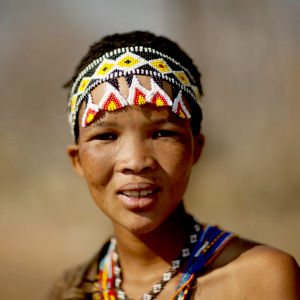
Inbreeding makes humans less fit to survive. We’re pheromonally predisposed to avoid it,8 but that can’t be done when mating within a typical Middle Stone Age hunter-gatherer band of around 25 people.9
How did early humans solve this problem? By mating with people from other bands.10 Because their environment kept changing back and forth from forest to grassland, they developed a mating strategy tailored to each environment:
| Forest: Promiscuity | Grassland: Exclusivity |
| In forest environments, it was easy to avoid inbreeding. In forests, prey animals don’t migrate, so bands in forest environments occupied a smaller area. As a result, the people in them didn’t have to travel far to mate with people in other bands.11 | In grassland environments, it was difficult to avoid inbreeding. In grasslands, prey animals migrated and ranged widely, so bands in grassland environments occupied a larger area. As a result, finding a mate in another band required significant travel. |
| Because it was easy to avoid inbreeding, increasing disease resistance was the main concern.12 Diseases flourish in wet climates. So, to give children the genetic diversity that increases disease resistance, forest-dwellers mated with various people from nearby bands. | Because it was difficult to avoid inbreeding, preventing inbreeding was the main concern. Suitable mates were harder to come by. So, to ensure that mating with relatives didn’t occur, grassland-dwellers paired off with a single person from another distant band. |
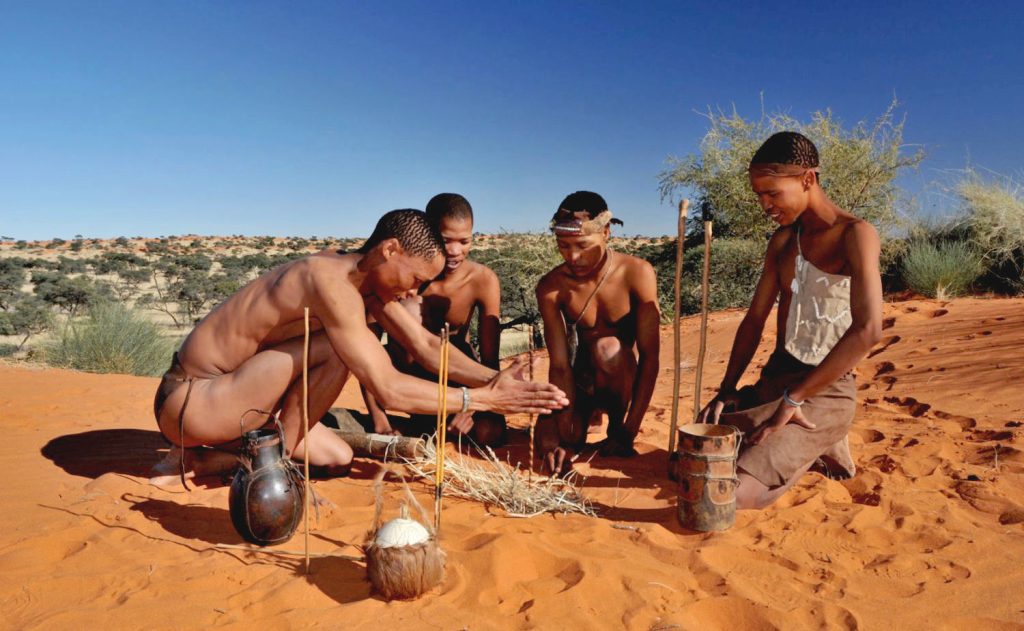
We see evidence of these two mating strategies in hunter-gatherers today:
| Forest: Promiscuity | Grassland: Exclusivity |
| The sexually-free Mbuti live in the Central African rainforest.13 | The sexually-restrained Hadza live on the East African savannah.14 |
| Colombia’s polyamorous Ache live in rainy river valleys.15 | Venezuela’s monogamous Hiwi live in arid grasslands.16 |
These strategies were effected through our genes.
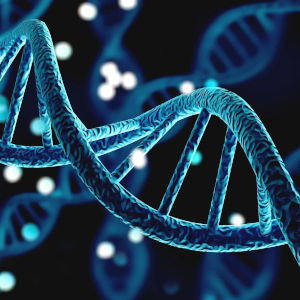
Our mating drives are generated by the very old, pre-mammalian parts of the brain that involve basic survival.17 This makes them too strong to be fully controlled by the “software” of a culture. As a result, our mating drives had to be directed by the “hardware” of our genes.
That’s why the two human mating strategies—promiscuity and exclusivity—became genetically “hard-wired”within us.18 Here’s how that wiring works:
- Our genes that directed mating needed to induce promiscuity and exclusivity. How did they do that? By generating various innate levels of testosterone and oxytocin. These hormones, in different amounts, produce the necessary effects in humans.
- These genes had to persist through many generations, so they’d be available when the climate changed every 20,000 years. How did they persist that long? Through dominant and recessive alleles, as in the genes that make us left- or right-handed.
These genes produce two basic temperaments.
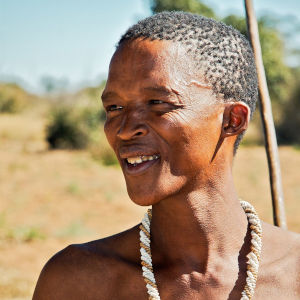
Because we modern humans inherited our genetic makeup from our hunter-gatherer forebears, each one of us is hard-wired to prefer either promiscuity or exclusivity.
Promiscuity involves sociability, and exclusivity requires reserve, so we’re born with one of two basic temperaments: sociable or reserved. Expressed through the two sexes, these temperaments work like this:
| Sociable Man His genes generate a higher level of oxytocin. This makes him sociable. | Reserved Man His genes generate a lower level of oxytocin. This makes him reserved. |
| Sociable Woman Her genes generate a higher level of testosterone. This makes her sociable. | Reserved Woman Her genes generate a lower level of testosterone. This makes her reserved. |
Early humans had four main social roles.
In the small hunter-gatherer bands that we humans lived in for most of our history, there were four main social roles:
| Fighting Confronting other predators | Gathering Obtaining edible plants |
| Hunting Killing prey animals | Tending Taking care of children |
Band members engaged in other social and survival activities, of course, but these were the four main roles that humans were “hard-wired” to fill. That hard-wiring evolved because various innate levels of testosterone and oxytocin were adaptive for more than just mating.
Different roles required different profiles.
Men with naturally high levels of testosterone were well-suited to Fighting. They’d fight off large predators that threatened the band or tried to steal the carcasses of prey animals they’d killed. The hormonal profiles of these men looked something like this:
| Testosterone | Oxytocin | |
| High | ||
| Elevated | ||
| Moderate | ||
| Minimal | ||
Women with naturally high levels of oxytocin were well-suited to Tending. They’d keep children safe, and help them become well-socialized so they could become contributing members of the band. Their hormonal profiles looked something like this:
| Testosterone | Oxytocin | |
| High | ||
| Elevated | ||
| Moderate | ||
| Minimal | ||
Men with slightly lower innate levels of testosterone were well-suited to Hunting. Less combative and more cooperative than other men, they were also more patient and observant, which helped them track down game animals. Their profiles looked something like this:
| Testosterone | Oxytocin | |
| High | ||
| Elevated | ||
| Moderate | ||
| Minimal | ||
Women with slightly higher innate levels of testosterone were well-suited to Gathering. More assertive than other women, they were hormonally-equipped to go out, gather plant foods, and deal with what they encountered. Their profiles looked something like this:
| Testosterone | Oxytocin | |
| High | ||
| Elevated | ||
| Moderate | ||
| Minimal | ||
The number of human social roles doubled.
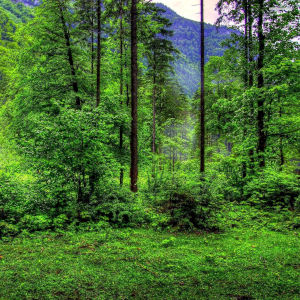
Around 50,000 years ago, the earth’s climate entered a wet phase. This created forest environments that enabled more humans to live in a given area, so we began living in larger groups.19 We also began migrating out of Africa en masse, so when the earth’s climate turned dry again, we still lived in large groups, in areas that retained their forests.
In forest and coastal environments, where food was abundant, the size of hunter-gatherer bands increased to 50-150 people.20 Other than climate change, what enabled the size of these bands to increase? The evolution of humans hard-wired to fill four more social roles:
| Dancing Celebrating/invoking fertility | Singing Making music/storytelling |
| Painting Representing life/meaning | Crafting Creating useful/essential items |
Why were these new social roles important to fill? Because as bands get larger, they generate a new problem that must be solved: maintaining group cohesion.
These new roles required new profiles.
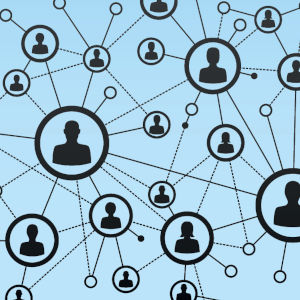
In hunter-gatherer bands, cohesion is paramount, because everyone must cooperate closely for the band to survive. As a band gets larger, maintaining that cohesion gets exponentially more difficult.21 That’s because there are four times as many social relationships in a 50-person band than there are in one that’s half as large.
Who can help a large hunter-gatherer band maintain its cohesion? Who can troubleshoot conflicts and keep everyone happy and productive? People with hormonal profiles like these:
Women with high oxytocin and moderate testosterone were well-suited to Dancing. Being both intuitive and outgoing, they were also well-suited to facilitate the complex interpersonal dynamics within larger bands.22 Their hormonal profile:
| Testosterone | Oxytocin | |
| High | ||
| Elevated | ||
| Moderate | ||
| Minimal | ||
Men with slightly lower testosterone and moderate oxytocin were well-suited to Singing. Being congenial and creative, they were also well-suited to coordinate rituals, as well as the performances that kept people entertained. Their profile:
| Testosterone | Oxytocin | |
| High | ||
| Elevated | ||
| Moderate | ||
| Minimal | ||
Women with slightly lower testosterone and oxytocin were well-suited to Painting. Being less outgoing and more perceptive, they were well-suited to illustrate the band’s shared values and meaning in cave paintings.23 Their profile:
| Testosterone | Oxytocin | |
| High | ||
| Elevated | ||
| Moderate | ||
| Minimal | ||
Men with a lower level of testosterone and moderate oxytocin were well-suited to Crafting. Being patient and productive, they were well-suited to make the sophisticated stone blades that enabled hunters to kill large prey animals.24 Their profile:
| Testosterone | Oxytocin | |
| High | ||
| Elevated | ||
| Moderate | ||
| Minimal | ||
These new kinds of people evolved quickly in evolutionary terms. Was it possible for them to evolve as quickly as they did? Yes. Evolution sometimes does occur quickly, as when herding peoples developed genes for lactose tolerance within a span of a few thousand years.
What evidence do we have that this occurred?
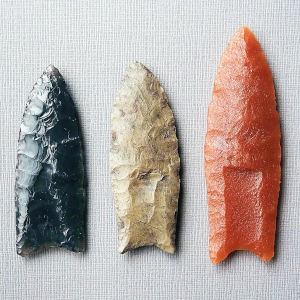
In archaeological finds from 50,000 to 20,000 years ago, we see evidence of the increased social specialization enabled by these new kinds of people: finely-crafted spear points, delicate sculptures, and beautiful cave paintings.
We also see anthropological evidence of these hormonal profiles today: among the Agta people, for example, band members who are gifted at storytelling (Singing) are accorded high status. That’s because the bands that include skilled storytellers are more cohesive, and thus more prosperous.25
Are we born with these sorts of predispositions? Yes. For example, if a man is exposed to more testosterone while in the womb, his ring finger will be longer than his index finger, and men with this trait predominate in sports that require aggression.26
There are 16 different human types.
Our species’ evolutionary past has equipped us with eight natural talents:
| Dancing Moving in sensual rhythm | Fighting Using force to protect |
| Singing Expressing feelings in sound | Hunting Using force to provide |
| Gathering Procuring good things | Painting Creating/appreciating art |
| Tending Nurturing to grow and heal | Crafting Creating useful things |
It has also given us two basic temperaments: sociable and reserved. For the sake of clarity, the Dyadic Type Framework™ uses animal names to designate men and women of each:
| Wolf A sociable man | Fox A sociable woman |
| Hawk A reserved man | Dove A reserved woman |
Combining the eight talents with the four designations, we get 16 types of humans:
| Fighting Wolf | Dancing Fox |
| Hunting Wolf | Hunting Fox |
| Dancing Wolf | Singing Fox |
| Singing Wolf | Painting Fox |
| Painting Wolf | Gathering Fox |
| Crafting Wolf | Tending Fox |
| Fighting Hawk | Gathering Dove |
| Hunting Hawk | Tending Dove |
Why do these particular types exist?
When we multiply eight talents by four designations, we get 32 options. So why, out of the 32 possible options, do only 16 types exist? For evolutionary reasons:
- Fighting Foxes and Fighting Doves don’t exist because fighting other predators was too risky for women—the procreative key to a band’s survival—to engage in. That’s why women never evolved enough testosterone to fill that social role.
- Gathering and Tending Wolves and Hawks don’t exist because men were too valuable as fighters, hunters, and craftsmen. It wasn’t efficient for a band to have them spend their time gathering plant food and tending to children.
- Dancing, Singing, Painting, and Crafting Doves and Hawks don’t exist because Doves and Hawks evolved to procreate in small grassland-dwelling bands. In these small bands, the only social roles were Fighting, Hunting, Gathering, and Tending.
For the same reasons, Hunting Foxes do exist. That’s because higher-testosterone women could be useful to a larger forest-dwelling band. They could hunt small game27 and also serve in domestic leadership roles (as seen with Clan Mothers in Haudenosaunee tribes).
The types are evenly distributed.
People of different types are more or less evenly distributed throughout the population today. Why is this the case? Because it was adaptive in our past. Having members of varying types distributed throughout a larger band enabled it to reap the rewards of labor specialization while minimizing social problems.
Even type distribution made bands better. For example, too many Fighting men in a band would have been disruptive, while one with too many Crafting men would have lacked direction. By the same token, too many Dancing women in a band would have been discordant, while one with too many Tending women would have lacked vitality.
Footnotes
- “How a Changing Landscape and Climate Shaped Early Humans,” Mark Maslin, The Conversation, 2013.
- “How Climate Change May Have Shaped Human Evolution,” Brian Handwerk, Smithsonian, 2014.
- A Brain for All Seasons: Human Evolution and Abrupt Climate Change, William H. Calvin, 2003.
- “Key moments in human evolution were shaped by changing climate,” Michael Slezak, New Scientist, 2013.
- “The Expensive-Tissue Hypothesis: The Brain and the Digestive System in Human and Primate Evolution,” Leslie Aiello and Peter Wheeler, Current Anthropology, 1995.
- “Self-perceived Attractiveness and Masculinization Predict Women’s Sociosexuality,”
Andrew Clark, Evolution & Human Behavior, 2004. - “Oxytocin reduces amygdala activity, increases social interactions and reduces
anxiety-like behavior irrespective of NMDAR antagonism,” Sobota, Mihara, et al,
Behavioral Neuroscience, 2015. - Inbreeding, Incest, and the Incest Taboo: The State of Knowledge at the Turn of the Century, Arthur P. Wolf, 2005.
- The Foraging Spectrum: Diversity in Hunter-Gatherer Lifeways, Robert L. Kelly, 1996.
- “Ancient genomes show social and reproductive behavior of early Upper Paleolithic foragers,” Sikora, Seguin-Orlando, et al, Science, 2017.
- The Foraging Spectrum: Diversity in Hunter-Gatherer Lifeways, ibid.
- “Productivity, biodiversity, and pathogens influence the global hunter-gatherer
population density,” Tallavaara, Eronen, Luoto, Proceedings of the National
Academy of Sciences, 2018. - The Symbols of Forest: A Structural Analysis of Mbuti Culture and Social Organization,
Mark Mosko, 1987. - “Mate preferences among Hadza hunter-gatherers,” Frank Marlowe, Human Nature, 2004.
- The Evolution of Desire, David Buss, 2008.
- The Evolution of Desire, ibid.
- “The Role of the Amygdala in the Development of Sexual Arousal,” Yehuda Salu, Electronic Journal of Human Sexuality, 2013.
- “Stay or Stray? Evidence for Alternative Mating Strategy Phenotypes in Both Men and Women,” Wlodarski, Manning, Dunbar, Biology Letters, 2015.
- Principles of Human Ecology, Peter Richerson, 1996.
- The Evolution of Complex Hunter- Gatherers, Ben Fitzhugh, 2003.
- Social Intelligence: From Brain to Culture, Emery, Clayton, Frith, editors, 2007.
- “Primates—A Natural Heritage of Conflict Resolution,” Frans de Wal, Science, 2000.
- “Were the First Artists Mostly Women?,” Virginia Hughes, National Geographic, 2013.
- “Modeling Specialization and Division of Labor in Cultural Evolution,” Michael Ehn, Vasteras, 2011.
- “Cooperation and the Evolution of Hunter-Gatherer Storytelling,” Smith, Schlaepfer, et al, Nature Research, 2017.
- “Why is digit ratio correlated to sports performance?,” Tae Beom Kim, Khae Hawn Kim, Journal of Exercise Rehabilitation, 2016.
- “Subsistence fishing methods of Nicobari tribes using traditional knowledge,” Ravikumar, Ram, et al, Journal of Marine and Island Cultures, 2016.