

Teska types reflect our natural social roles.

Legacy personality systems assume that living in modern societies is normal for us humans. The Teska Type System™, by contrast, recognizes that modern life is a very recent development. That’s why its types reflect the social roles we took in hunter-gatherer bands.
For a million years, we humans evolved to live in those bands, and that made us who we are. We may have central air and smartphones now, but we’re still essentially the same creatures that hunted and gathered for a living on prehistoric plains.
For example, let’s say you’ve assembled a group of 10 men to coordinate their efforts and hit a target with projectiles. Will they be hunting mammoths, or playing lacrosse? When it comes to our instinctual nature, the activities are the same.
Teska types describe our deep-level nature.

Because the types in the Teska Type System™ are based on a million years of human evolution, they describe a person’s deep-level nature. When you know your Teska type, you know your core character. You know your natural, inborn strengths and inclinations.
That makes this type system more useful than legacy personality systems. By showing managers who’s naturally good at what, it helps them build high-performing teams. By showing people who they naturally “click” with, it helps them find romance.
Legacy type systems have significant flaws.
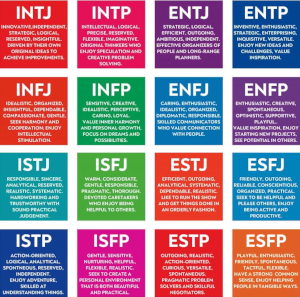
The Teska Type System™ is based on current research. Many other personality type systems are based on the Myers-Briggs Type Indicator, which was devised in the 1940s.
Because the MTBI employs either/or dichotomies, it can’t accurately represent human qualities, which exist on a spectrum. This flaw renders it essentially useless, which is why it has been described as “totally meaningless,” and “the fad that won’t die.”
As for the other legacy personality type systems in use today, they’re not much better:
- The DISC specifies four styles of human behavior that include Dominance and Submission. It can tell you who prefers to give or receive orders, and not much else.
- The Enneagram of Personality comes from the world of esoteric spirituality. Based on the work of a very strange mystic, it’s vague, complicated, and confusing.
- The Minnesota Multiphasic Personality Inventory (MMPI) was originally used for diagnosing mental illness, and while it has been repurposed, that’s what it’s good for.
Legacy assessment systems are very limited.
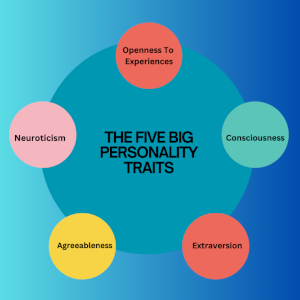
Seeing the flaws in type systems like the MTBI, psychologists began creating systems to assess personality not with types, but through traits. They identified five traits that they considered to be important, then measured them using surveys. Most of the personality assessment systems used by assessment firms focus on these traits.
These five traits—Openness, Conscientiousness, Extraversion, Agreeableness, and Neuroticism—reflect a person’s cultural conditioning more than their innate tendencies. As a result, personality assessment systems based on this Five Factor Model (FFM), measure someone’s surface-level qualities, not their deep-level nature.
This makes FFM systems such as the NEO-PI and the 16PF useful, but in a very limited way. They’re mainly used to help large corporations answer simple hiring questions like: “Would this job applicant be better at working in the checkout line, or in the warehouse?”
This isn’t surprising, given that these legacy systems are informed only by psychology, a field with a track record of generating ideas and programs that fail in the real world. The Teska Type System™, by contrast, is based on research in several other scientific disciplines: anthropology, archaeology, endocrinology, and climatology.